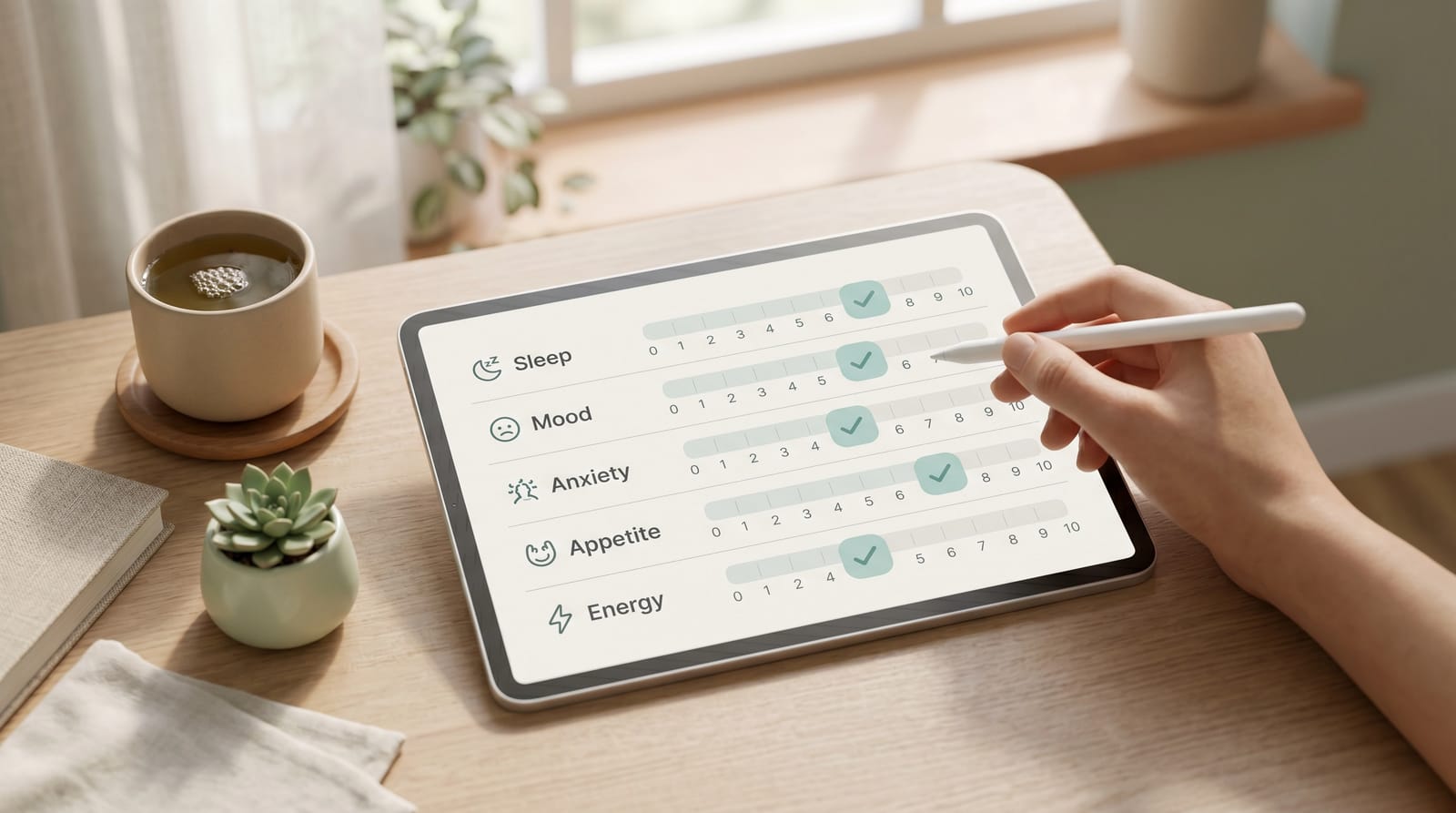
Should You Keep a Journal for Your First Psychiatric Appointment?
Bottom line: Yes, and your psychiatrist will probably thank you. Patterns beat recollections.
Most people walk into their first appointment with a blank slate. When the doctor asks, "How have you been sleeping?" or "How long has this been going on?" — memory fails. Stress distorts time. You might say "a few weeks" when it has actually been three months.
A simple log fixes that. Not because the doctor wants to read your deepest secrets, but because patterns beat recollections. A week or two of honest ratings gives them real data to work with.
What to Track (Keep It to Five)
Don't turn this into a research project. Pick five categories and rate them 0–10 daily. The most useful ones for a first visit:
- Mood / Anxiety — core diagnostic signal
- Sleep — disruptions show up in almost every mood disorder
- Energy / Apathy — helps distinguish depression from anxiety
- Appetite — often an early indicator something is off
- Daily Functioning — the #1 thing psychiatrists actually care about
Add a one-line note when a score is extreme. A 9/10 anxiety day with the note "argument with partner" is way more useful than the number alone.
How to Calibrate the 0–10 Scale
Don't inflate scores because the day felt terrible. Use this rough anchor:
- 0–2: Minimal impact. You noticed it, but you functioned normally.
- 3–5: Moderate. It slowed you down or required extra effort.
- 6–8: Severe. You avoided responsibilities or social contact because of it.
- 9–10: Crisis. You could not perform basic self-care or had intrusive thoughts of self-harm.
If you hit 9–10, skip the journal and call emergency services. The journal is a tool for pattern recognition, not a substitute for immediate safety.
How Many Days?
You don't need months of data. 10 to 14 days is the sweet spot — long enough to show a pattern, short enough that the details are still fresh in your memory. If you only have 3 days, bring them anyway. Three honest data points are better than zero.
What to Bring (and What to Leave Out)
Bring your daily ratings and one or two representative notes. Leave your raw emotional entries at home if you want — you don't have to share your deepest fears with a stranger on day one. The ratings table alone is enough to start the conversation.
One last thing: if you miss a day, just leave it blank. Don't try to catch up from memory — fake data is worse than no data.
Tracking sensitive mental health data? Make sure you're using a journal that actually keeps it private. MindsKeep's client-side encryption encrypts entry content on your device before it reaches Firestore, and AI analysis is opt-in — so you control what gets shared, and with whom.
Track Symptoms Privately on MindsKeep