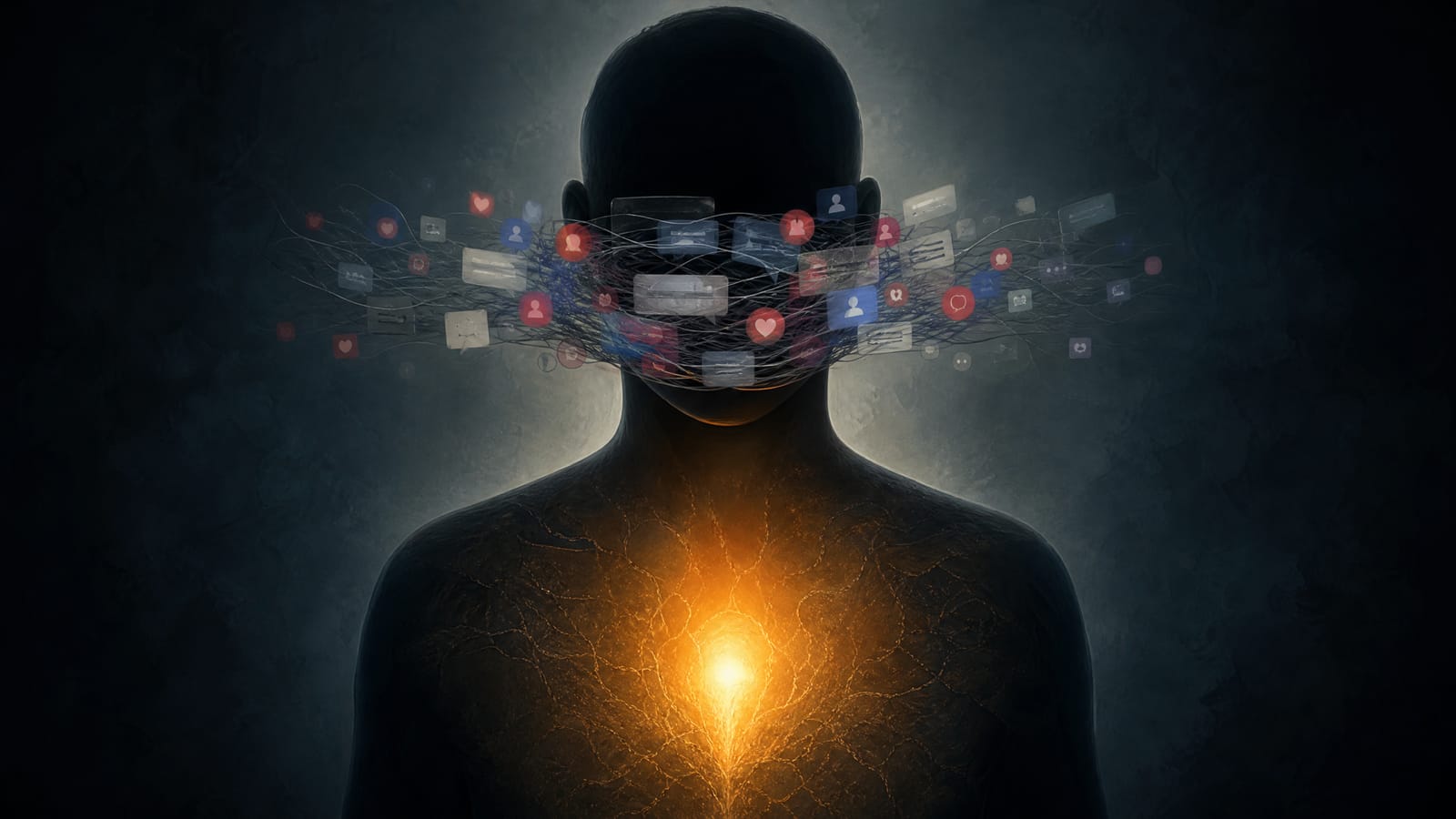
The Weight of the Unsaid
Bottom line: Chronic self-censorship can lead to emotional numbing, anxiety, and a diminished sense of self. Private digital journaling offers a vital sanctuary for radical honesty, allowing individuals to reclaim their authentic voice and improve their mental well-being.
You’re in a conversation, and a thought flashes across your mind—a genuine opinion, a raw emotion, or perhaps a dissenting view. But instead of speaking, you pause. You calculate the social cost, the potential for misunderstanding, or the fear of judgment. You swallow the words, nodding along instead. We’ve all been there. While social tact is necessary, a growing body of research suggests that chronic self-censorship—the habitual suppression of one's true thoughts and feelings—is becoming a silent mental health crisis [1]. When we silence ourselves, we don't just lose our voice; we risk losing our connection to our authentic selves.
What is Self-Censorship?
Self-censorship is the act of intentionally withholding information, opinions, or feelings in the absence of direct coercion, often driven by the fear of social, professional, or personal consequences [2]. In our hyper-connected, yet increasingly polarized world, the pressure to conform to perceived social norms has never been higher. This isn't just about political discourse; it's about the everyday moments where we hide our struggles, our joys, or our unique perspectives to maintain a carefully curated public persona.
“Habitual suppression of one's views in social interactions can lead to emotional numbing and diminished self-efficacy.”
Chloe Carmichael, PhD, Open Therapy Institute (2025) [1]
This "internal gag order" can become so ingrained that we begin to self-censor even in our own minds, losing track of what we truly believe or feel.
The Psychological Toll
The cost of this silence is profound. Research indicates that chronic self-silencing is linked to increased levels of anxiety, social isolation, and a decline in self-esteem [2] [3]. When we consistently hide our true identities, we create an internal conflict that drains our mental energy. This can lead to a phenomenon known as "emotional numbing," where the effort required to suppress negative or controversial thoughts eventually dulls our ability to experience positive emotions as well [1].
Furthermore, the fear of being "canceled" or facing public shaming on social media has created a state of heightened arousal and apprehension for many [2]. This constant vigilance—always watching what we say for fear of a backlash—is a significant source of chronic stress. In the long run, this environment of fear and repression can stifle personal growth and prevent the deep, authentic connections that are essential for mental well-being.
The Journal as a Safe Haven
In an era where every word can be scrutinized, the need for a truly private space for self-expression has never been more critical. This is where journaling, particularly within a secure digital environment, becomes a vital therapeutic tool. A private journal acts as a sanctuary—a place where the "internal gag order" is lifted. By externalizing our unsaid thoughts, we can process them without fear of judgment or consequence [4].
MindsKeep was built on this very principle. By providing client-side encryption and a privacy-first architecture, it ensures that your journal remains a space of absolute psychological safety. When you know your words are for your eyes only, you can finally practice radical honesty. You can explore the thoughts you were afraid to speak, unpack the emotions you've been suppressing, and begin to reconnect with your authentic voice.
Radical Honesty: A Path to Growth
Practicing radical honesty in your journal isn't just about venting; it's about self-discovery and growth. Here’s how you can use your private space to reclaim your voice:
- The "Unsent Letter": Write to someone you've been self-censoring with. Say exactly what you feel, without the filter of social tact. You don't have to send it; the act of articulating it is where the healing begins.
- The Opinion Audit: List three topics where you feel you've been holding back your true views. Explore *why* you're afraid to speak up and what your authentic opinion actually is.
- Emotional Labeling: When you feel "numb" or overwhelmed, use your journal to name the specific emotions beneath the surface. Research shows that labeling emotions can reduce their intensity and improve mental clarity [5].
- Values Alignment: Reflect on whether your daily actions and words align with your core values. Journaling helps bridge the gap between who you are and who you present to the world.
By making radical honesty a daily practice, you begin to dismantle the internal structures of self-censorship, leading to greater self-trust and emotional resilience.
Conclusion: Reclaim Your Voice
Self-censorship may feel like a necessary shield in a complex world, but when it becomes a habit, it turns into a burden that weighs heavily on our mental health. Reclaiming your voice doesn't always mean shouting from the rooftops; it starts with being honest with yourself. Through the practice of private digital journaling, you can create a space where your authentic self can finally breathe. Reclaim your voice, unburden your mind, and rediscover the clarity that comes with radical honesty. Your mental well-being depends on it.
Reclaim Your Voice with MindsKeepReferences
- Carmichael, C. (2025). Self-Censorship Is Becoming a Mental Health Crisis. Frontiers in Mental Health, Issue 2.
- Adeyemi, V. (2025). The Psychological Impact of Cancel Culture: Anxiety, Social Isolation, and Self-Censorship. Premier Journal of Psychology.
- Tan et al. (2025). Self-Censorship in Journalism: The Role of Emotional, Professional, and Social Factors. Digital Journalism.
- Bloomington Meadows. (2024). The Benefits of Journaling for Mental Health.
- University of Rochester Medical Center. Journaling for Emotional Wellness.